Civic Culture, Sovereignty and Federal Union:
Futures and Pasts of a Shared European Heritage,
1515-2025
Europe seems in crisis. Perhaps the European Union has even entered, as commentators like to put it, an era of ‘polycrisis’. Fundamental European debates concern the future direction of the Union, especially in terms of its democracy, its division of sovereign powers and its civic cultures. What should the make-up of the Union be in terms of democratic institutions? How should citizens and policy makers address the division and workings of sovereign powers among EU-institutions, states, regions and towns? And wielding sovereign powers, what then should be Europe’s foundations in terms of civic cultures and political values?
These are perplexing questions, but we don’t need to start from scratch. In debating what kind of Federal Union Europe should be, we can draw on a rich European heritage of federal traditions. The exploration of the riches of that cultural and political heritage is at the heart of our project.
Four Workshops
The principal aim of our collective project is to contribute to the historical study of the political debates on federal unions in Europe, from 1450 until the present. After a first, preliminary workshop in September 2025 we decided to focus, also in the light of recent political troubles and tribulations, on the themes of sharing sovereignty and civic cultures in Europe’s federal unions.
Our second workshop (on 15 and 16 June 2026) will have papers that study some of Europe’s historical debates on how to share (or not) sovereignty and sovereign powers. Starting with Machiavelli’s analysis of sovereignty and the state, the workshop looks at some of Europe’s seminal Federal Unions, most notably the Polish-Lithuanian one, and takes up the discussions before and after Jean Bodin’s highly influential attempt, in 1576, to present indivisibility and absoluteness as hallmarks of sovereignty. This ‘absolute’, indeed absolutist vision has been taken up, revised and contested by a long line of European politicians and legal and political authors. The workshop focuses on the work of thinkers, activists and politicians who argued that sharing sovereign powers was possible, indeed vital. Starting with Johannes Althusius, the workshop moves to the Anglo-Scottish Enlightenment debates involving Andrew Fletcher, to the seminal work of philosopher Immanuel Kant, and to the thorny Irish debates of the early modern period.
This second workshop finishes in the 19th-century, looking at French and Danish-Atlantic debates. Our third workshop (scheduled for March 2027) aims to follow the story of the debates on sharing (and not sharing) sovereignty through the debates of the disastrous decades of the twentieth century up to the post-war foundation of European federal institutions and the crises of our own days. In the end we ask whether it is possible, on the basis of a broader and deeper understanding of key historical debates on how sovereignty could and should be shared in federal unions, to make better sense of the relationship between the European Union and its constitutive parts, its states, its regions and, most of all, us, its citizens.
Our fourth and final workshop, scheduled for June 2027, moves beyond the discussions that highlight the importance of constitutional arrangements. Taking up the critique that even the most refined constitution will only work if citizens are willing to make it work and give civil and democratic vibrancy to their commonwealths and federal unions, the fourth workshop will explore how the role of citizens and civic cultures were and are seen in European political debates. The workshop will address key questions: which civic and civil values were foundational to the civic life of Europe’s republics and federations – and which civic and civil values could and should underpin our Union in the present and future?
Organisation and Outcomes
As this outline of the project indicates, an important second aim is to connect historical study with reflections on Europe’s present and future as Federal Union. In practical terms the project brings together 15-20 historians of political thought, political theorists and policy makers to jointly study some of the key dimensions of the pasts, presents and futures of ‘Federal Union’ in Europe.
In terms of planning and organising most of the work is done by Bert Drejer, Joshua Livestro (both from the University of Utrecht) and Martin van Gelderen — with Iain Hampsher-Monk (emeritus Exeter) offering wise advice. The core of our network of researchers also includes Laurelin Middelkoop, PhD-researcher at the EUI, and Marie Curie Fellows Jonas Gerling and Brian Olesen.
In terms of organisational set up, workshop format and academic ambiance we follow the example set by projects such as Republicanism: A Shared European Heritage (two volumes, CUP, 2005) directed by Quentin Skinner and Martin van Gelderen.
In terms of research outcomes, the plan is to publish two volumes, one focusing on sharing sovereignty in Europe’s federal unions, the other on the history of European debates on civic cultures.
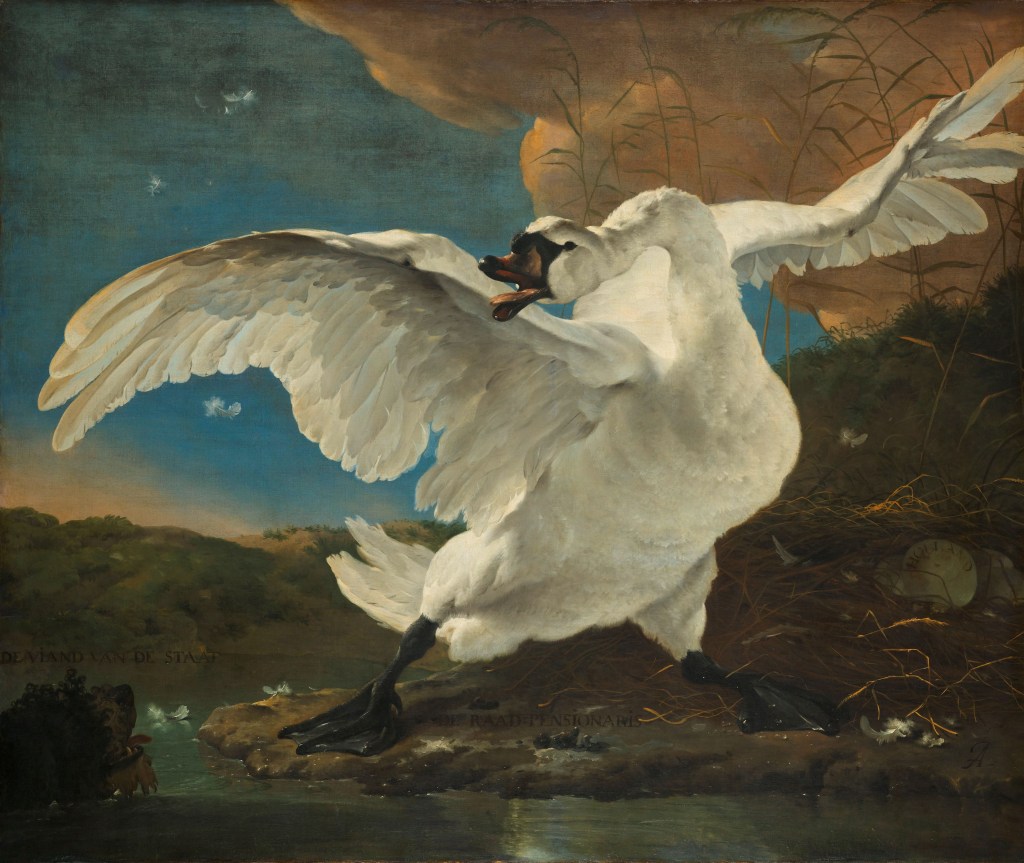
 IN UTRAMQUE PARTEM